USD liquidity +0.18%EUR spread -0.07%JPY vol +0.42%B-T-C flow +1.9%E-T-H activity +0.8%
The World's Money, One Weekly Read

Global money flows and FX signals, made clear

Decode dollar liquidity, European rates, yen swings, stablecoin settlement and offshore allocation in a single mobile-first feed.

10Global currencies
24hLive market rhythm
B-T-CB-T-C conversion desk
Global Heat

Ten stories wealth readers keep opening

FX policy, rate cycles, stablecoin flows and digital asset market structure, ranked by reading heat.

Euro breaks out of the pack and rebounds with its biggest single-day gain in nearly two months
No.1 · Euro

Euro breaks out of the pack and rebounds with its biggest single-day gain in nearly two months

For anyone converting USD or other currencies into euro, or betting on a stronger euro, recent fundamentals have turned strongly supportive. A cooling high dollar lent a hand: after the dollar had surged on inflation data, US Treasury yields slumped on Oct 15, pulling the dollar index back from a 102.5 high. That pushed EUR/USD up a sharp 0.5% from an 18-month low to around 1.1216, the biggest single-day gain in nearly two months. Mid-term, investment banks such as Goldman Sachs and MUFG note in their latest FX outlook that with ECB policy relatively stable and German fiscal stimulus building, EUR/USD could break toward 1.19 to 1.21, or even above 1.20, making the current window a fairly ideal one for building non-USD, local-currency exposure.


Sterling shows strong resilience among non-dollar currencies as the economy surprises with growth
No.2 · Sterling

Sterling shows strong resilience among non-dollar currencies as the economy surprises with growth

For those converting into British assets or pounds, the latest UK macro data is a direct positive: the Office for National Statistics reported an unexpected 0.1% GDP growth in August, beating market expectations, keeping sterling firm among non-dollar currencies with GBP/USD recovering to around 1.3253. Fiscal discipline also supports stability: the Treasury is expected to cover new spending in the upcoming budget by raising taxes or cutting spending rather than simply borrowing more, a stance the IMF views with mild approval. That removes fears of another UK fiscal shock, and sterling has hit a 16-month high against the euro as its exchange-rate stability strengthens.

Aussie and kiwi carry the strongest short-term momentum on commodities and trade
No.3 · Aussie

Aussie and kiwi carry the strongest short-term momentum on commodities and trade

For anyone watching commodity currencies such as AUD and NZD for conversion, they are the current stars of the international cross-rate market. Mid-October short-term relative-strength models (FX Matrix) rate the Australian dollar the strongest major currency globally for several consecutive observation periods. On the back of strong global commodity trade, AUD/USD has climbed and held above the key 0.7001 level, while NZD has risen in step to 0.5625. Banks widely expect that with the RBA policy rate likely to stay among the highest in the G10 over the medium term, its attractive carry will keep favoring AUD/USD toward the 0.6940 to 0.6950 range and beyond.

Narrowing US-Japan rate spreads ease the yen long-term depreciation pressure
No.4 · Yen

Narrowing US-Japan rate spreads ease the yen long-term depreciation pressure

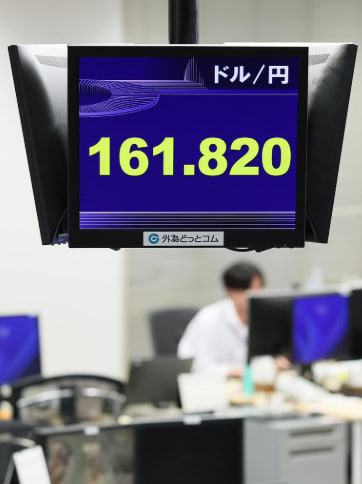
For those looking to convert surplus dollars into yen, or watching yen assets: Fed officials have collectively pushed back, reassuring markets that they will not rush an aggressive hike in October, causing the two-year and ten-year US-Japan yield spreads to begin narrowing. The yen recovered modestly to around 158.16 in mid-October. As the Bank of Japan clearly continues to normalize policy, the market expects USD/JPY to trend steadily back toward the 146 to 148 range — a stronger yen — and to fully escape the previous depths of historic depreciation.

European Union (euro EUR)
EU · Euro

European Union (euro EUR)

Reference rate: 1 USD = 0.9174 EUR. Core positives: inflation has eased back into target range and services are recovering strongly; the latest ECB macro assessment shows the eurozone economy emerging from stagnation. Outlook: banks including Goldman Sachs and MUFG expect that as European fundamentals recover, the cyclical high for USD-to-euro conversion has passed and the euro is likely to grind stronger against the dollar.

United Kingdom (sterling GBP)
UK · Sterling

United Kingdom (sterling GBP)

Reference rate: 1 USD = 0.7752 GBP. Core positives: GDP unexpectedly accelerated, growing 0.1% in August, and the new budget has removed market doubts with high fiscal discipline and mild IMF approval. Outlook: strong growth and stable politics make sterling the standout among recent G10 currencies, with GBP/EUR hitting a 16-month high.

Japan (yen JPY)
Japan · Yen

Japan (yen JPY)

Reference rate: 1 USD = 147.06 JPY. Core positives: US-Japan rate spreads are narrowing and the BoJ is advancing policy normalization. As Fed officials strike a dovish tone and Treasury yields fall sharply from highs, the two-year and ten-year spreads have narrowed. Outlook: the market broadly expects USD/JPY to struggle to break back to prior historic lows, with the yen long-term depreciation pressure substantially eased and the currency edging toward an appreciation channel.

Switzerland (Swiss franc CHF)
Switzerland · Franc

Switzerland (Swiss franc CHF)

Reference rate: 1 USD = 0.885 CHF. Core positives: geopolitical uncertainty is drawing strong safe-haven bids. Faced with a complex global macro-political backdrop, the franc status as the ultimate safe-haven asset is reinforced, with long-term international capital continuing to flow into the Swiss financial system. Outlook: the franc has shown strong resistance to a powerful dollar, with clear capital-preservation and inflation-hedge benefits.

Australia (Australian dollar AUD)
Australia · Aussie

Australia (Australian dollar AUD)

Reference rate: 1 USD = 1.5152 AUD. Core positives: commodity exports are booming and short-term momentum leads G10 currencies. Strong global demand for key minerals and energy keeps widening the trade surplus, and the RBA has no near-term intent to cut, preserving an attractive rate advantage. Outlook: short-term relative-strength models show the Aussie among the strongest major currencies, having held firmly above key levels against the dollar recently.

Canada (Canadian dollar CAD)
Canada · Loonie

Canada (Canadian dollar CAD)

Reference rate: 1 USD = 1.3699 CAD. Core positives: sharing the spillover of US economic strength. As the largest US trading partner, Canada exports are directly pulled by strong recent US retail and consumer data, and firmer commodity prices add vitality to the economy. Outlook: CAD fundamentals strengthen with the broader North American economy and remain very steady among commodity currencies.

Hong Kong, China (Hong Kong dollar HKD)
Hong Kong · HKD

Hong Kong, China (Hong Kong dollar HKD)

Reference rate: 1 USD = 7.8125 HKD. Core positives: the linked exchange-rate system stands rock solid and a high-rate environment attracts arbitrage flows. With HKD pegged tightly to the dollar and HIBOR holding relatively high, large arbitrage capital returns to Hong Kong financial markets, and the HKMA reserves remain ample. Outlook: converting to HKD offers very high safety and very low exchange-rate risk in asset allocation, tracking the dollar strength closely.

Singapore (Singapore dollar SGD)
Singapore · SGD

Singapore (Singapore dollar SGD)

Reference rate: 1 USD = 1.3333 SGD. Core positives: its role as a global wealth-management center is cemented and a tight FX policy is maintained. MAS continues its relatively tight slope policy on the SGD to fight inflation, drawing safe-haven capital. Outlook: the Singapore dollar is among Asia most resilient and steady local currencies, a clear positive for investors seeking diversification and stability.

Dubai, UAE (UAE dirham AED)
Dubai · Dirham

Dubai, UAE (UAE dirham AED)

Reference rate: 1 USD = 3.6725 AED (strictly pegged). Core positives: a major non-oil economic transformation has maximized resilience. Latest official data show UAE non-oil GDP grew a steady 1.8% in H1 2026, lifting non-oil activity to a record 79.2% of overall GDP. Against regional geopolitical turbulence, this diversification greatly strengthens Dubai resilience to oil-price shocks, with asset safety well received by international capital. Inflation has cooled markedly, with Dubai annual inflation easing from a 5.7% high to 5.03% in September and the PMI rebounding to a high 54.5, signaling prices such as airfares and holiday products are returning to a stable path. Because the dirham is pegged to the dollar, the recent peak-and-pullback in the strong dollar index has notably boosted the purchasing power of major non-dollar currencies such as EUR and GBP. EUR/AED, for example, has recovered from last year 4.12 low to around 3.86, effectively a 6 to 7% across-the-board conversion discount for European multinationals, overseas property buyers and cross-border shoppers.

South Korea (won KRW)
Korea · Won

South Korea (won KRW)

Reference rate: 1 USD = 1,340.90 to 1,347.52 KRW (sharply stronger than the July high of 1,588 per dollar, a strong range for the year). Core positives: growth is booming and the IMF made a rare large upward revision. In its Oct 13 World Economic Outlook, the IMF raised Korea 2026 growth forecast by 0.7 percentage points to 3.3% — seven times the global average. It is the first time in four years Korea growth outpaces the US, and the first time in 16 years it leads advanced economies by such a margin. AI chip exports are surging through geopolitical risk: the IMF noted Korea, as a core global AI hardware manufacturing hub, along with Taiwan accounts for 62% of global net AI computing hardware trade. Strong external demand and booming exports at AI semiconductor leaders such as SK Hynix and Samsung fully offset the negative effects of Middle East conflicts. On financial liberalization, Korea has formally launched a 24-hour USD/KRW spot FX trading mechanism, running seamlessly from Monday morning to Saturday morning, letting global investors hedge and convert without time gaps and greatly improving the competitiveness and liquidity safety of won assets.

France (euro EUR)
France · Euro

France (euro EUR)

Reference rate: 1 USD = 0.9174 EUR (the euro has recently traded around 1.11 to 1.12 against the dollar). Special positives on asset restructuring and conversion discounts: French bond yields spiked as the government 2027 budget dispute and public debt approaching 120% of GDP triggered a sell-off in French government bonds, with the 10-year yield climbing as high as 4.5%. That periodic domestic fiscal cooling weighed on the euro in early October, with EUR/USD briefly hitting a near-17-month low around 1.116. This creates a France discount window for cross-border shoppers and asset allocation: for those holding dollars who want euros for French luxury goods, high-value French assets, study or travel, the fiscal tug-of-war has actually lowered the euro conversion cost, forming a rare high-purchasing-power window. French core financial assets look deeply undervalued: a Morningstar equity analysis on Oct 13 noted that the three major banks listed in Paris — BNP Paribas, Societe Generale and Credit Agricole — suffered irrational declines amid French debt worries and are now rated 4-star significantly undervalued assets. Since most of their revenue comes from global and pan-European markets outside France, short-term domestic fiscal pain does not materially weaken their long-term profitability, making buying undervalued French core dividend assets with a strong dollar a double bargain. On policy backstops, rating agencies such as Fitch warned on French fiscal conditions in their October assessment but expect parliament to pass the budget relatively smoothly to avoid prolonged chaos ahead of the April 2027 presidential election. Eurozone finance ministers have also publicly voiced confidence in France, meaning the tail risk of a French-triggered euro debt crisis is very low and fundamentals could rebound as the budget is settled.

Market Magazine

Rates, policy, exchange paths and crypto reading flow

Built for trade payments, offshore allocation, global travel, stablecoin settlement and tax timing.

The dollar rate turning point is not the end; cash carry is what changes FX behavior
Policy

The dollar rate turning point is not the end; cash carry is what changes FX behavior

As companies keep more foreign currency on balance sheets, finance teams compare forward points, short deposits, money funds and wire costs at the same time.

Quotes are getting shorter as FX validity moves from months to weeks
Trade

Quotes are getting shorter as FX validity moves from months to weeks

Freight, materials and currency moves squeeze margins together, so more trade teams merge quote locks, payment routing and conversion timing.

Multi-currency cash baskets become a fixed family-office agenda
Wealth

Multi-currency cash baskets become a fixed family-office agenda

USD, EUR, CHF, GBP and SGD weights now sit beside education, relocation, insurance and global tax planning.

Premium travel budgets are being split by city and currency
Travel

Premium travel budgets are being split by city and currency

Hotel deposits, private medical visits, yacht charters and school tours turn FX into an account and payment-path issue.

Stablecoin settlement turns arrival time into competitive edge
On-chain

Stablecoin settlement turns arrival time into competitive edge

For cross-border services and digital goods, speed, compliant access and auditable records affect whether clients stay.

Private banks place FX, bonds and notes on one risk map
Banking

Private banks place FX, bonds and notes on one risk map

Clients ask not only where rates go, but what term, yield, tax file and next transfer window look like.

AI risk controls speed cross-border payments and sharpen account reviews
Tech

AI risk controls speed cross-border payments and sharpen account reviews

Source of funds, transaction frequency, receiving regions and address labels increasingly affect pass rates.

Cross-border tax filings turn every FX receipt into evidence
Tax

Cross-border tax filings turn every FX receipt into evidence

As global tax information exchange widens, wealth owners need a clean trail from source of funds to final settlement. Keeping conversion receipts, holding costs and filing calendars together turns routine FX records into a ready asset file the moment authorities ask for proof.

Trading Share

Top ten global currencies

1USD · US DollarUnited States89.2%
2EUR · EuroEurozone28.9%
3JPY · Japanese YenJapan16.8%
4GBP · British PoundUnited Kingdom10.2%
5CNY · Chinese YuanChina8.5-8.8%
6CHF · Swiss FrancSwitzerland6.4%
7AUD · Australian DollarAustralia~6.0%
8CAD · Canadian DollarCanada~6.0%
9HKD · Hong Kong DollarHong Kong3.6-3.8%
10SGD · Singapore DollarSingaporeTop 10
Dollar rate expectationsFed

Dollar rate expectations

Front-end yields set the value of cash and decide whether companies hedge early.

Eurozone growth splitECB

Eurozone growth split

The gap between manufacturing and services makes euro hedging depend more on order cycles.

Yen policy windowBOJ

Yen policy window

Rate spreads, import costs and verbal intervention make Asian hours more reactive.

Wealth hubSingapore

Wealth hub

Multi-currency accounts, fund platforms and regional HQ capital keep SGD on screen.

Community Sentiment

Watch what the crowd is buying and selling

Aggregated from thousands of reader conversions across 60+ markets. Read FX sentiment the way you read a stock.

Digital asset trading screens
Digital Assets

Stablecoins are linking FX, payments, hedging and reinvestment

B-T-C

B-T-C quotes are entering trade finance chats

Volatility, depth and entry windows matter; fiat rails, pair slippage and holding periods decide real cost.

B-T-C

B-T-C flows shape risk appetite

ETF demand, institutional custody and macro rates change B-T-C's portfolio role while volatility remains central.

E-T-H

E-T-H focus shifts to yield and application revenue

Staking yield, on-chain fees and Layer 2 activity make E-T-H read more like digital infrastructure.

SOL

High-throughput chains compete on payment and trading experience

Speed, fees and mobile access move the new chain narrative closer to real use.

Wealth Signals

Four judgments worth staying for

Cash has geographyThe same money in New York, Zurich, Singapore or an on-chain account carries different liquidity, yield and review timing.
FX is part of marginReal gross margin in trade is often rewritten between quote approval and final collection.
Stablecoins are not isolatedThey connect banks, e-commerce platforms, exchanges, wallets and offshore accounts.
Positioning beats predictionPolicy language, inflation data and capital flows quietly reshape portfolios long before price alone confirms the move.